
ADHD, Photography, and Running a Business Without Burning Out: A conversation with licensed counselor and photographer Andrea Pittman
If you have ADHD and you run a photography business, you probably know this feeling.
Some days you can do a week’s worth of work in a single sprint. Other days, replying to one email feels like pushing a refrigerator up a hill.
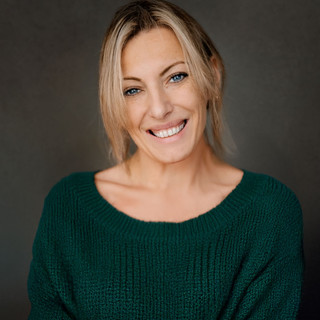
For my final episode of October, which was ADHD Awareness Month, I sat down with Andrea Pittman of Andrea Michelle Photography. Andrea is a wedding and lifestyle branding photographer who works across Arizona and Washington. She also runs a private practice as a licensed mental health counselor specializing in neurodivergence.
So yes, she gets it from both angles.
We talked about what actually helps ADHD photographers function, not the advice that sounds good in a planner but collapses the minute real life shows up.
Andrea’s story, two careers, two states, one ADHD brain
Andrea didn’t start with a clean, linear “I chose this path” story. She basically started with both.
Photography was always part hobby, part creative outlet, and when she was in grad school and couldn’t manage a full time job on top of everything, photography became the flexible option that helped her support herself. It stuck because it gave her something a lot of ADHD brains crave: balance.
Not forty hours of one thing.Not forty hours of the other thing.A blend that keeps her mind engaged without trapping her in monotony.
And that hit home for me, because the appeal of photography for ADHD people is real. Every session is different. Every client is different. Even the light is different. It keeps you awake in a way that a predictable schedule does not.
The “NADAR” is real
Andrea described something she and her business partner call “NADAR,” the neurodivergent radar.
It’s that instant sense you get when you meet someone and you just know they’re your people. Sometimes they’re diagnosed, sometimes they’re not, but the connection is fast and easy. There’s a magnetism there.
Andrea sees this in therapy and in photography. Neurodivergent people often bond quickly, and that connection can build trust in a way that’s hard to manufacture with a scripted client experience.
If you’ve ever had a consult and thought, “Oh yeah, this is going to be a great fit,” and then it turns into your easiest client relationship of the year, that’s what she means.
“Do what works for you” is not lazy advice, it’s the whole game
Andrea’s number one theme was simple and deeply validating.
Do what works for your brain.
Not what you wish worked.Not what works for other people.Not what looks productive on Instagram.
She talked about trying the classic “admin day” strategy. Thursday is admin day, taxes, bookkeeping, projects, all of it. And then realizing it did not work for her at all.
Instead, she works by deadlines. She waits until there is urgency, because urgency produces dopamine. She said she often organizes a full year of expenses a few days before her meeting with her accountant.
And honestly, hearing that from someone who presents as extremely competent was a relief.
Because a lot of us have been taught that if we do things in bursts, it means we’re irresponsible. Andrea reframed it as a different relationship with time.
Not a moral issue.
Procrastination is often just an ADHD time lens
Andrea said something that I want tattooed on a sticky note.
Procrastination is a negatively coded word.
Many of us were punished for procrastinating in school, even when the result was good. We were told we were doing it wrong, even if we were doing it effectively.
For ADHD brains, waiting until the last minute can be the mechanism that creates focus. It can be adrenaline, urgency, and pressure. It does not always feel pleasant, but it’s not automatically a character flaw.
If you’re reading this and thinking, okay but I still hate this about myself, I get it.
But part of what Andrea emphasized was removing shame from the equation. Shame does not create executive functioning. It just creates spiraling.
Coffee shop focus is not random, it’s stimulation
Andrea said she writes better in coffee shops. I immediately understood.
If you have ADHD, you might concentrate better with a little controlled chaos around you. The hum of people. The background noise. The stimulation. It can pull your brain into the present.
This made me think about how many ADHD photographers try to force themselves into quiet, sterile productivity spaces, and then wonder why they can’t start.
Sometimes your brain needs a little “outside noise” to stop making its own noise.
Low dopamine tasks need a strategy, not willpower
Taxes, bookkeeping, anything admin related. Most ADHD photographers would rather alphabetize their camera batteries than deal with those tasks.
Andrea suggested a few practical approaches:
Hire out what you can, even if it’s partial support
Pair the task with something that provides dopamine, like a podcast or YouTube
Use body doubling, meaning having someone physically nearby while you work
Talk out loud while you do it, which helps your brain stay engaged
Body doubling is especially useful. Sometimes just having your spouse in the room, or a friend on a call, makes the task possible.
Not because they’re helping.Because your nervous system stays online when someone is there.
The Solve It Grid and why rest is not optional
Andrea referenced a book she loves called Your Brain’s Not Broken by Tamara Rosier. She described a tool from it called a “Solve It Grid,” a four square framework that helps you categorize tasks by stimulation level and stress.
The basic idea she shared was this:
If you do something highly stimulating and stressful, you need to intentionally pair it with something calming and regulating afterward.
Not as a reward for being good.As a nervous system requirement.
Her example was doing business taxes, then giving herself permission to do a low stimulation activity like zoning out on the couch, playing a phone game, or doing something physically grounding like being outside.
This is where she pointed out something entrepreneurs struggle with, especially ADHD entrepreneurs.
We do not schedule rest.We wait until our bodies force it.
And that costs us.
Executive functioning is not just a business problem, it’s a life systems problem
When I asked about executive functioning, Andrea didn’t jump straight into business tools. She talked about home systems.
Because if your home life is draining your limited spoons, your business will feel harder than it needs to.
She gave examples like:
Meal prepping or using meal services to reduce daily decision fatigue
Accepting that chores may be delayed after an intense workday
Creating systems that reduce steps, like a laundry basket in every room
Dropping perfectionist expectations that don’t serve you
That last one matters.
Andrea said she hangs laundry inside out and doesn’t waste energy flipping everything the “right way.” And she made a point that I love: when you stop using your limited brain energy on unnecessary perfection, you have more capacity for the tasks that actually matter.
ADHD inertia is real, and it cuts both ways
Andrea described a concept she called ADHD inertia.
Once we start moving, we can build a ton of momentum.
Book one mini session, and suddenly you can book twelve.Start a project, and suddenly you’re deep in it for hours.
That momentum can be a superpower. But it can also trick you into overcommitting because you feel unstoppable in the moment.
This is where she brought it back to capacity.
Momentum is not the same as infinite energy.
The goal is to ride the wave without letting it drag you underwater.
Turning your brain off might not be the goal
We also talked about vacations and how impossible it can feel to shut your brain down.
Andrea said something I appreciated, because it’s honest.
Sometimes you don’t turn it off.Sometimes you listen to what it needs.
If your brain is racing, maybe you need to write everything down to get it out of your head. Maybe you need movement. Maybe you need to do the task you keep thinking about so you can stop thinking about it.
This is not permission to never rest. It’s permission to stop pretending your brain operates like someone else’s.
Where to find Andrea
Andrea shares a lot of her thoughts on ADHD and photography online, and she also just launched a podcast focused more broadly on ADHD and mental health.
You can find her here:
Instagram: Andrea Michelle Photo
TikTok: Andrea Michelle Photo
Threads: Andrea Michelle Photo
Podcast: Brilliant Minds? (Brilliant Minds Wellness)
She also mentioned she’s working on an ADHD guide specifically for wedding photographers, plus a guide for clients, because neurodivergence affects weddings in real ways and the industry rarely talks about it.
Final takeaway
If you have ADHD and you’re trying to run your photography business like a neurotypical person, you’re going to feel like you’re failing.
But you’re not failing.You’re just using the wrong instruction manual.
This conversation with Andrea was a reminder that ADHD tools are not about becoming more “disciplined.”They’re about designing a life and a business that works with the brain you have.
And that’s allowed.


Comments